Water Is Life, Water Is a Right: Why Water Security Must Be at the Heart of Climate Resilience
There are some things people can live without for a day.
Water is not one of them.
Before the first meal is prepared, before a farmer walks to the field, before a child leaves for school and before a family begins its daily routine, there is water.
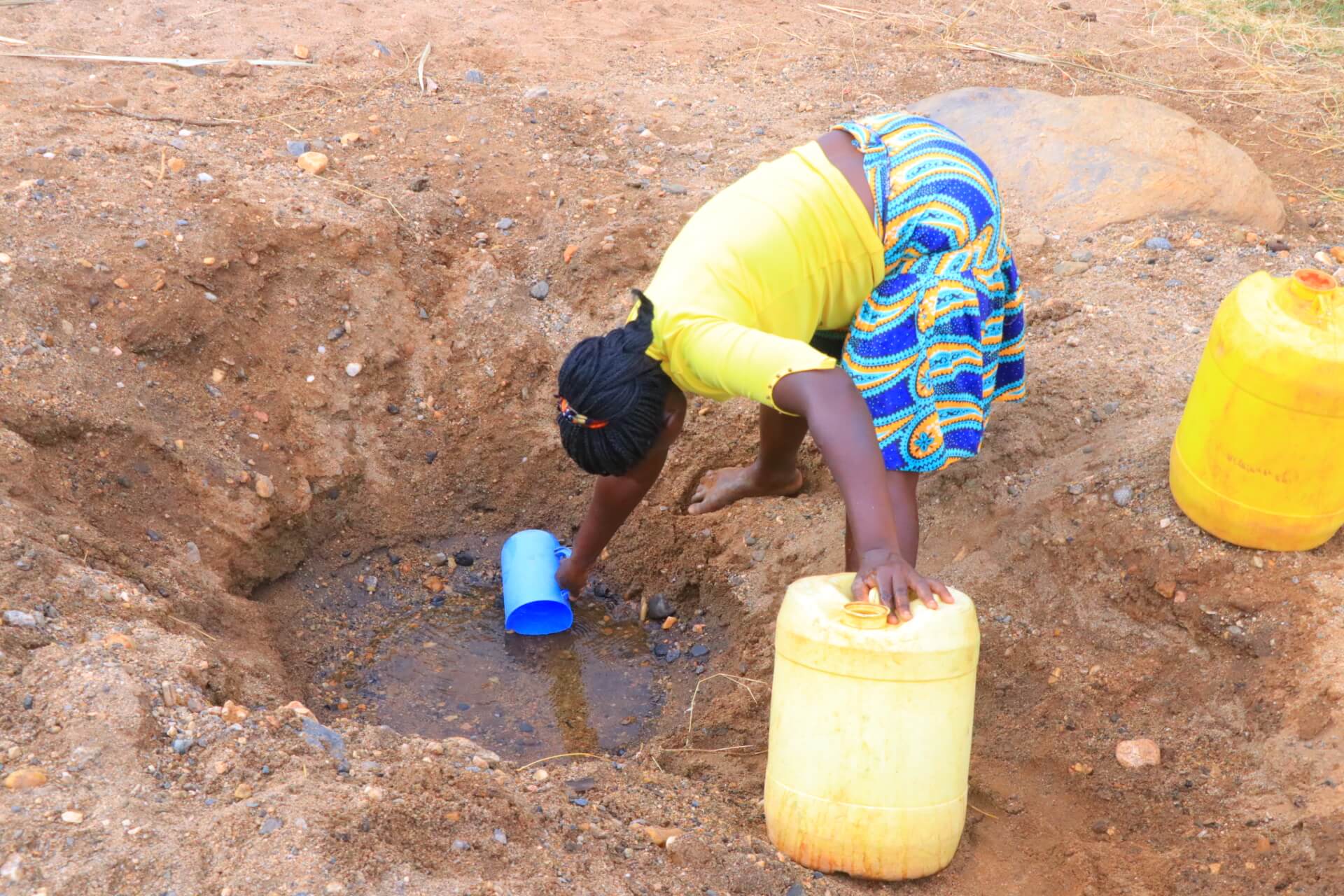
It is used to drink, cook, wash, grow food, keep livestock, run businesses and maintain health. For communities living in areas affected by water scarcity, however, accessing this basic necessity can become a daily struggle.
In parts of Tharaka Nithi County, that struggle is increasingly difficult to ignore.
Water scarcity is not simply an environmental problem. It is a question of health, livelihoods, dignity, equality and human rights. And as climate change alters rainfall patterns, intensifies droughts and increases the frequency of extreme weather events, the question of who has access to safe and reliable water—and who does not—is becoming even more urgent.
For ACEECA, water security therefore sits at the intersection of environmental protection, climate action, sustainable livelihoods and community resilience.
The organization is now exploring partnerships with the Tharaka Nithi County Government to support practical interventions that could improve access to water while protecting the ecosystems upon which that water depends.
Water is a human right, not a privilege
In 2010, the United Nations General Assembly explicitly recognized the human right to safe and clean drinking water and sanitation, affirming that access to water is essential to the full enjoyment of life and all human rights.
The recognition was significant because it changed the way the world should think about water.
Water is not simply a commodity to be accessed by those who can afford it. It is a fundamental requirement for human dignity and wellbeing.
The right to water means that people should have access to water that is sufficient, safe, acceptable, physically accessible and affordable for personal and domestic use.
Yet recognition of a right does not automatically guarantee its realization.
The latest WHO and UNICEF data show that 2.1 billion people globally still lack safely managed drinking water, with rural communities and other marginalized populations continuing to face significant inequalities.
Behind every statistic are people.
A mother deciding how much water can be spared for cooking.
A farmer watching crops wither because rainfall has become unreliable.
A child spending time collecting water instead of studying.
A community health worker worrying about the consequences of unsafe water.
This is why water security must be understood through a human lens.
When the water point is far away, the burden is not shared equally
Water scarcity rarely affects everyone in exactly the same way.
Women and girls in many communities continue to carry a disproportionate responsibility for collecting household water. WHO and UNICEF report that in many countries, women and girls are primarily responsible for water collection, with some communities in sub-Saharan Africa spending more than 30 minutes a day collecting water.
Time spent looking for water is time that cannot easily be spent in school, at work, caring for children, farming or participating in community life.
For farmers, unreliable water can mean reduced production and lost income.
For households, it can mean difficult choices between drinking, cooking, cleaning and other essential needs.
For communities, persistent water insecurity can deepen poverty and increase vulnerability to climate shocks.
The consequences extend far beyond the water point.
Tharaka Nithi: where water security meets climate resilience
The challenge is particularly important in Tharaka Nithi, a county whose communities depend heavily on natural water sources and groundwater.
Recent county-level monitoring data illustrate the complexity of the situation. A January 2026 assessment by the National Drought Management Authority found that rivers accounted for 46 per cent of reported main water sources, while piped water accounted for 21 per cent and boreholes 8.5 per cent. The same assessment reported declining operational capacity of some boreholes, while some areas face challenges with saline groundwater that is unsuitable for human consumption.
These realities make water security a question not only of how many water points exist, but also of where they are located, whether they function, whether the water is safe, how communities can access it and whether the sources can withstand a changing climate.
This distinction is critical.
A borehole that is installed but not functional does not provide water.
A water source that is too far from households does not provide equitable access.
And infrastructure that depends on a degrading catchment cannot guarantee long-term water security.
The solution therefore requires a systems approach.
Beyond drilling: building a water-secure community
It is tempting to see boreholes as the answer to water scarcity.
They are part of the answer, but they are not the whole answer.
Water security requires investment in infrastructure alongside investment in the ecosystems that sustain water resources.
It means looking at groundwater, rivers, wetlands, catchments, rainfall, land use, agricultural practices and community institutions as interconnected parts of one system.
That is the approach ACEECA is seeking to advance in Tharaka Nithi.
During a recent engagement with the Tharaka Nithi County Government in Chuka, ACEECA and the County explored possible areas of partnership around borehole development and improving the distribution of water to communities.
The County delegation was led by Chief Officer for Water, Eng. Joyce Mutua, while the ACEECA delegation was led by Chief Executive Officer Pamela Gitobu.
The discussions focused not only on drilling additional boreholes, but also on how existing water infrastructure could be better utilized, including the possibility of piping water from existing boreholes to various community groups.
It is a practical question with potentially significant consequences:
How can communities get more value from water infrastructure that already exists while expanding access to areas that remain underserved?
But the conversation did not end at the borehole.
Protecting the source of the water
During the meeting, the County also emphasized its interest in working with partners on catchment production and restoration.
For ACEECA, this is an important area of potential collaboration.
Water security begins long before water reaches a household tap.
It begins in the landscape.
Forests, wetlands, rivers, soils and vegetation all play roles in the water cycle. When catchments are degraded through deforestation, erosion and unsustainable land use, their ability to regulate and store water can be weakened.
Restoring these landscapes is therefore not simply an environmental exercise. It is an investment in water security.
The link between climate change, water and resilience is increasingly clear. WHO notes that climate change is already placing water supplies under pressure, while droughts and floods can disrupt services and damage communities. Building resilience therefore requires water systems and infrastructure that can withstand climate variability and extreme events.
This is why ACEECA sees water infrastructure and ecosystem restoration as complementary interventions rather than separate agendas.
One brings water closer to people.
The other helps protect the natural systems that produce and sustain it.
Both are necessary.
From the meeting room to the riverbank
Following the engagement with the County Government, ACEECA and the County delegation travelled to the Muthangacwa and Gituma Rivers to monitor the progress of trees planted along the riverbanks.
The visit was a reminder of how closely water security and environmental restoration are connected.
The two rivers have been the focus of ongoing restoration work aimed at improving riparian ecosystems and strengthening the resilience of communities that depend on them.
Monitoring the trees after planting is particularly important.
Environmental restoration does not end when a seedling is put into the ground.
The real question comes later:
Did it survive?
Is it growing?
Is the riverbank recovering?
Are communities taking ownership?
What lessons can be applied elsewhere?
These questions are at the heart of ACEECA’s Monitoring, Evaluation, Research and Learning approach.
They also reflect a broader principle: good climate action must be measured by what changes on the ground—not simply by what activities are completed.
Climate resilience starts with everyday needs
Climate resilience is sometimes discussed in technical language: adaptation, mitigation, vulnerability assessments, early warning systems and climate finance.
All of these are important.
But resilience also has a much simpler face.
It is the ability of a family to find safe water during a prolonged dry spell.
It is a farmer being able to maintain food production when rainfall becomes unpredictable.
It is a community having functioning water infrastructure when drought strikes.
It is a river catchment that can absorb rainfall rather than allowing degraded land to turn heavy rains into destructive floods.
It is a child who does not have to spend hours searching for water.
This is why water must occupy a central place in climate resilience planning.
WHO and UNICEF have repeatedly emphasized the need to strengthen water, sanitation and hygiene systems in the face of growing climate risks. In 2026, UN-Water’s latest GLAAS findings highlighted the importance of stronger WASH systems, financing, governance, data and climate-responsive planning to accelerate progress towards universal access.
Water security is therefore not a standalone development issue.
It is connected to virtually every aspect of sustainable development.
The opportunity for Tharaka Nithi
The emerging partnership between ACEECA and the Tharaka Nithi County Government presents an opportunity to take a more integrated approach to the county’s water challenges.
The ambition is not simply to count boreholes.
It is to explore how water infrastructure, community needs and ecosystem restoration can work together.
Potential areas of collaboration include strengthening access to groundwater through borehole development, improving the use of existing water sources, exploring community-level water distribution systems and supporting catchment restoration.
Such interventions must, however, be informed by local realities.
Communities understand where water is available, where it is scarce, how people currently access it and what barriers they face.
Their knowledge must therefore be part of the solution.
The most sustainable water interventions are not imposed on communities. They are developed with them.
Putting communities at the centre
For ACEECA, community participation is not an afterthought.
It is central to the organization’s Theory of Change.
When communities have the knowledge, resources, opportunities and institutional support to participate in decisions affecting their natural resources, they are better positioned to become long-term stewards of those resources.
This is particularly important in water management.
A borehole may be constructed by a project, but its sustainability depends on what happens after the project ends.
Who manages it?
Who maintains the pump?
How are costs handled?
Who has access?
How are disputes resolved?
What happens during periods of scarcity?
These are governance questions as much as they are technical questions.
Building water security therefore requires building local capacity and ownership alongside physical infrastructure.
A partnership that could go beyond water
The conversation between ACEECA and Tharaka Nithi County also points towards a broader opportunity.
Water security can become an entry point for addressing several interconnected development challenges at once.
Improved water access can support agriculture and livelihoods.
Catchment restoration can strengthen ecosystems and protect water sources.
Community nurseries can create opportunities for local participation and income generation.
Environmental education can strengthen stewardship.
Climate-smart agriculture can help farmers adapt to changing weather patterns.
And stronger local partnerships can create the institutional foundation needed to sustain these gains.
This is the kind of integrated action increasingly required in a changing climate.
The human measure of success
Ultimately, the success of any water security intervention should be measured in human terms.
It should be seen in the distance a family no longer has to travel to collect water.
In the crops that survive a dry season.
In the river that continues to flow.
In the tree that survives along a restored riverbank.
In the community group that can access reliable water for its activities.
In the child who has more time to learn.
And in the dignity that comes from knowing that something as fundamental as clean water is within reach.
The global recognition of water as a human right places a responsibility on governments, development partners, civil society and communities to move from recognition to action. The United Nations has called for resources, capacity-building, technology and cooperation to advance access to safe, clean, accessible and affordable water for all.
For Tharaka Nithi, that work is both urgent and deeply local.
A future where water security and environmental protection move together
ACEECA’s engagement with the Tharaka Nithi County Government marks the beginning of a conversation—not the end of one.
The next phase will require continued dialogue, technical assessment, community engagement and partnership building to determine where interventions can have the greatest impact.
But the direction is clear.
Water security cannot be separated from climate resilience.
Climate resilience cannot be separated from healthy ecosystems.
And environmental restoration cannot be separated from the people whose lives depend on these ecosystems.
The challenge is considerable. But so is the opportunity.
By bringing together county leadership, communities, environmental organizations and development partners, Tharaka Nithi can explore solutions that respond to immediate water needs while protecting the natural systems that will determine water availability in the years ahead.
Because water is more than a resource.
It is life. It is dignity. It is a human right. And in a changing climate, it is one of the foundations upon which resilient communities will be built.
For ACEECA, the commitment is to help make that right more tangible, one partnership, one community and one restored catchment at a time.