From Water Access to Catchment Restoration: ACEECA and Tharaka Nithi County Explore New Pathways for Community Water Security
Chuka, Tharaka Nithi County — Access to reliable water remains one of the most pressing challenges facing communities in Tharaka Nithi County, where households, farmers and community groups continue to navigate persistent water shortages.
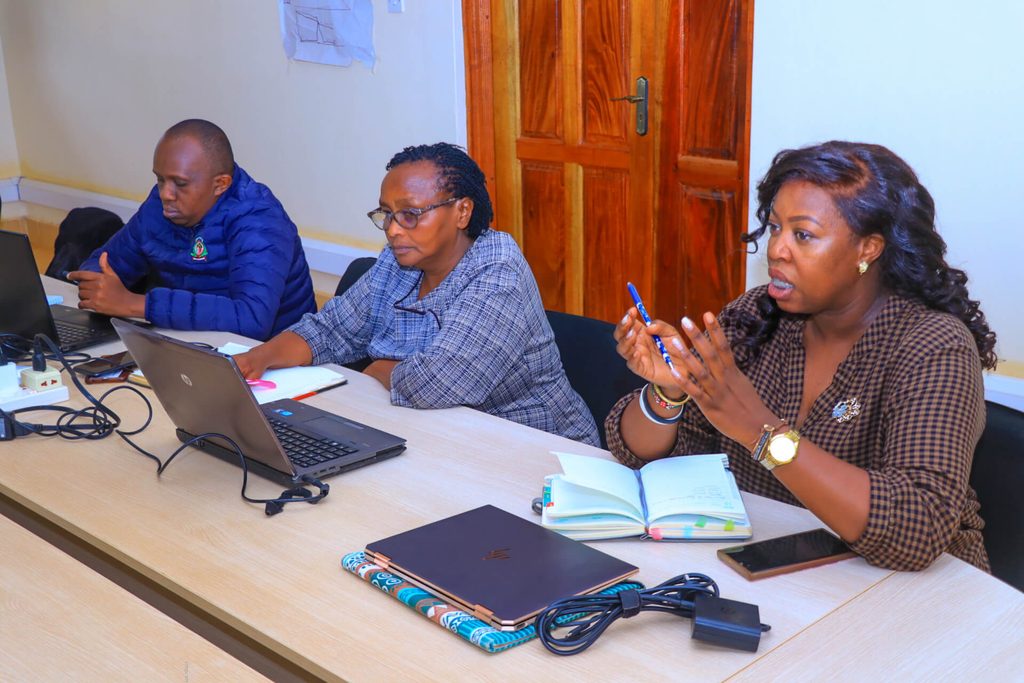
Against this backdrop, the African Centre for Environment, Energy and Climate Advocacy (ACEECA) held a strategic engagement with the Tharaka Nithi County Government to explore practical areas of partnership aimed at improving access to water while strengthening the ecosystems that sustain the county’s water resources.
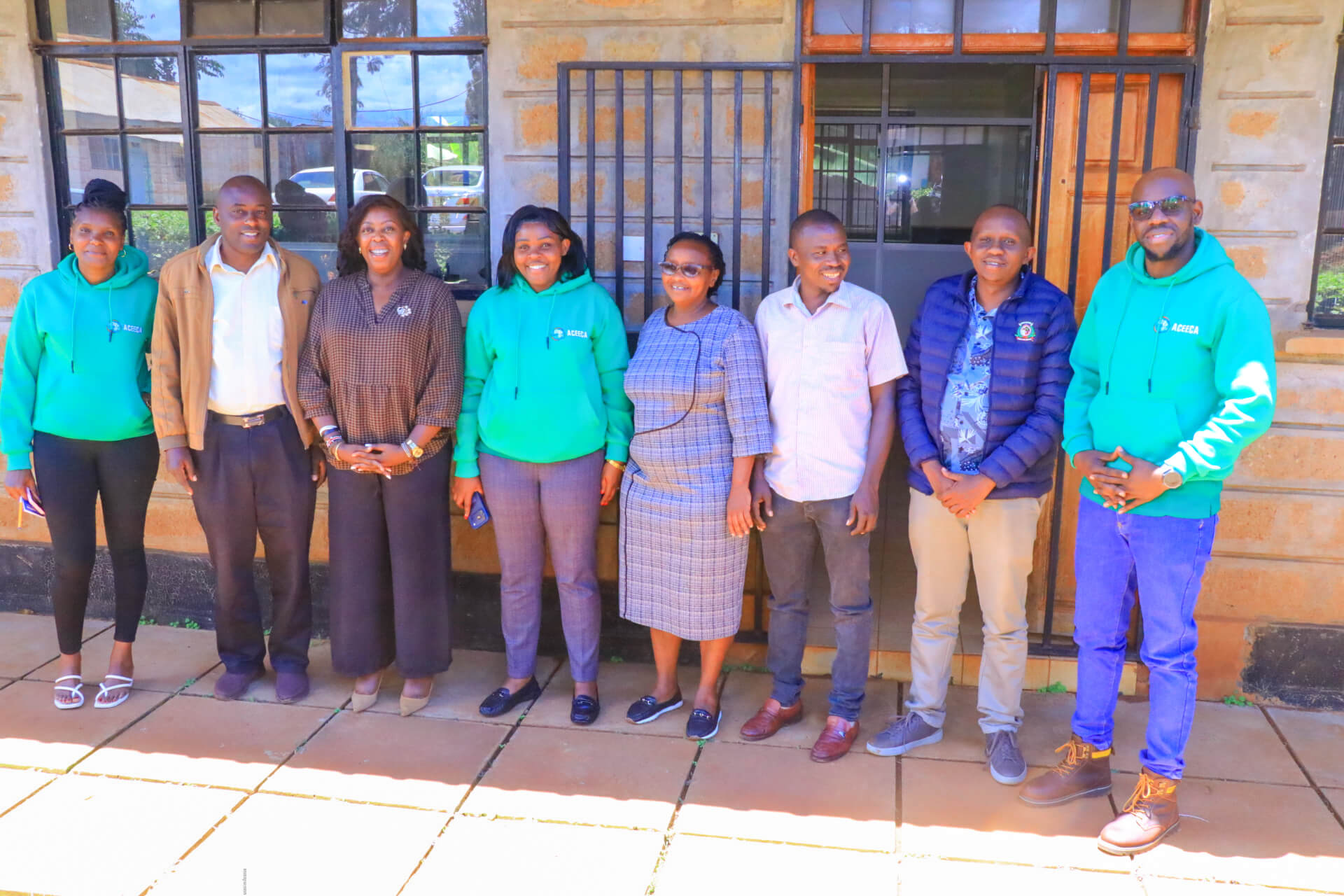
The meeting, held at the Tharaka Nithi County Water Offices in Chuka, brought together the County’s water leadership and ACEECA’s management team for discussions centred on borehole development, water distribution, catchment restoration and community resilience.
The County delegation was led by Chief Officer for Water, Eng. Joyce Mutua, while the ACEECA delegation was led by Chief Executive Officer, Pamela Gitobu.
Responding to a growing water challenge
For communities across Tharaka Nithi, water scarcity is more than an environmental concern. It affects everyday life.
Limited access to reliable water can place additional pressure on households, constrain agricultural production, affect livelihoods and increase the vulnerability of communities already experiencing the impacts of a changing climate.
During the engagement, the County highlighted the scale of the challenge, noting that 523 boreholes currently serve the entire county.
While borehole infrastructure provides an important source of water, the discussion recognized that infrastructure alone does not automatically translate into accessible water for every community.
The conversation therefore turned to how existing water infrastructure could be better utilized.
One of the areas explored was the possibility of developing systems to pipe water from existing boreholes to community groups and other areas experiencing water shortages. Such an approach could help maximize the value of existing investments while identifying opportunities for additional infrastructure where it is most needed.
For ACEECA, the discussions represent an opportunity to connect water access with a broader agenda of climate resilience and sustainable development.
Beyond boreholes: Protecting the landscapes that produce water
A key message emerging from the meeting was that addressing water insecurity requires more than increasing water infrastructure.
The health of rivers, wetlands, forests and catchment areas plays a fundamental role in determining the availability and quality of water downstream.
Recognizing this connection, the County Government also emphasized the importance of catchment production and restoration and expressed its interest in bringing development partners on board to support these efforts.
Chief Officer for Water, Eng. Joyce Mutua, particularly expressed the County’s interest in partnering with ACEECA in this area.
For ACEECA, the opportunity is significant.
Catchment restoration can help protect water sources, reduce land degradation, improve ecosystem health and strengthen communities’ ability to withstand climate-related pressures. It also provides an opportunity to bring environmental conservation and community development into the same conversation.
The engagement therefore pointed towards an integrated approach: improving access to water while investing in the natural systems that make water security possible.
Taking the conversation from the boardroom to the river
Following the meeting, the ACEECA and County delegations travelled to the Muthangacwa and Gituma Rivers to undertake a monitoring exercise.
The field visit provided an opportunity for the teams to assess progress made through ongoing riverbank restoration efforts, including the growth and survival of trees planted along the riverbanks.
The visit also brought the day’s discussions into sharper focus.
The condition of a river and its surrounding landscape is closely connected to the wellbeing of the communities that depend on it. Restoring vegetation along degraded riverbanks can help reduce erosion, protect watercourses and contribute to healthier riparian ecosystems.
For ACEECA, monitoring the progress of restoration activities is an important part of ensuring that environmental interventions translate into meaningful and lasting outcomes.
It is also consistent with the organization’s commitment to Monitoring, Evaluation, Research and Learning (MERL)—using evidence and lessons from the field to strengthen implementation and inform future interventions.
Building partnerships around shared priorities
The engagement between ACEECA and the Tharaka Nithi County Government comes at a time when communities across Kenya are confronting increasingly complex challenges linked to climate change, water insecurity and environmental degradation.
No single institution can address these challenges alone.
They require collaboration between county governments, communities, development organizations, environmental institutions, the private sector and other partners.
The discussions in Chuka demonstrated the value of bringing these priorities together.
Water infrastructure can help address immediate needs. Catchment restoration can strengthen the natural systems that sustain water resources. Community participation can help ensure that interventions respond to local realities and remain sustainable over time.
Together, these approaches can contribute to a more resilient water system and stronger communities.
A shared vision for a water-secure future
For ACEECA, the engagement with Tharaka Nithi County is not simply about identifying a new project opportunity. It is about exploring how partnerships can respond to a challenge that directly affects people’s lives.
The discussions also reaffirmed the importance of placing communities at the centre of environmental and climate action.
A water-secure future will require investments in infrastructure, but it will also require investment in the ecosystems that produce and regulate water. It will require stronger institutions, local ownership, evidence-based decision-making and sustained partnerships.
The next steps will focus on identifying practical areas of collaboration between ACEECA and the County Government, particularly around borehole development, water distribution, catchment restoration and community resilience.
As the teams continue the conversation, one principle remains clear:
Water security begins with protecting water sources, strengthening communities and investing in the landscapes that sustain life.
For the communities of Tharaka Nithi, that work is not an abstract climate agenda. It is about having water for the home, the farm, the livestock and the future.
And that is where meaningful climate action begins, with people, with partnerships and with solutions that respond to the realities on the ground.